
Our abundant birdlife in Kaikōura wouldn't be complete without numerous other varieties of seabirds including shags, penguins, gulls and terns.
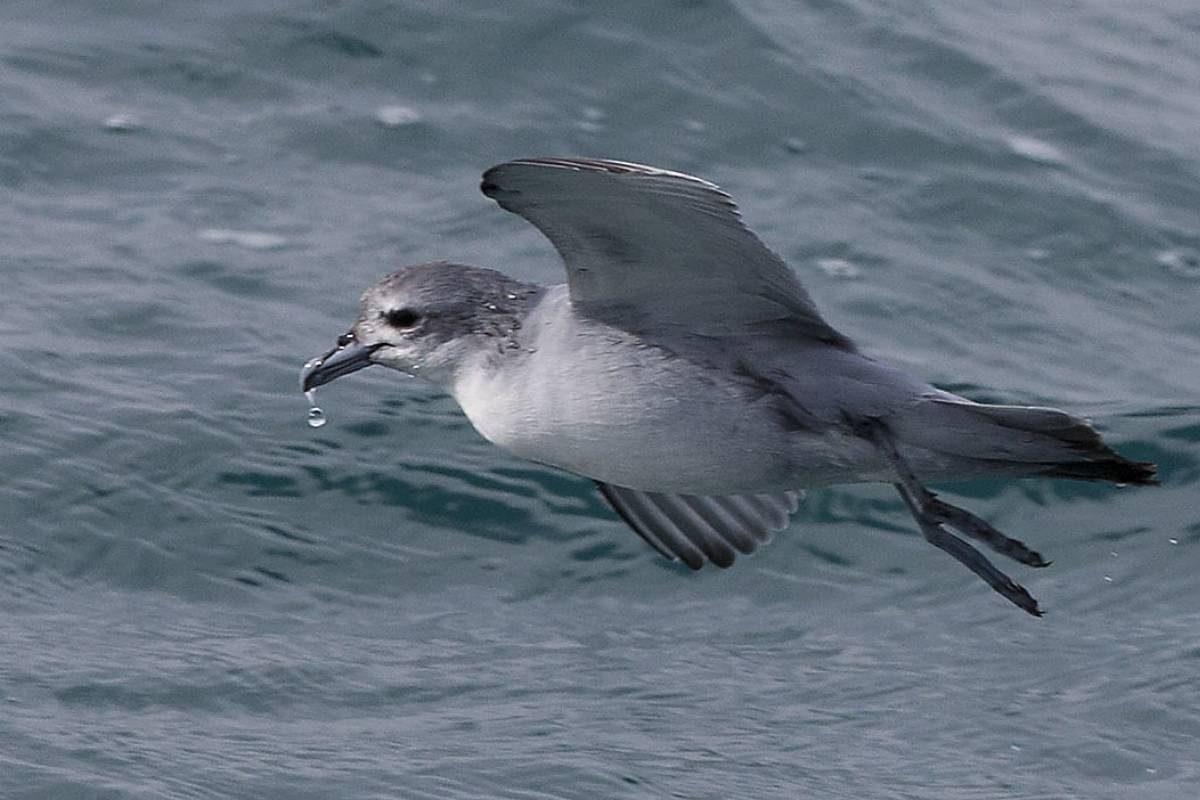
Fairy Prion
The chances are that most prions seen off Kaikōura will be fairy prions.
The fairy prion (Pachyptila turtur) is one of the most abundant seabirds found in New Zealand waters. It's generally seen more than five miles offshore. but in Kaikōura it can be sighted much closer in certain conditions. The small silver-grey bird weighs only 120 grams, about a third the size of the red-billed gull, with a distinctive black "W" pattern across it's back. Colonies of tens of thousands breed in burrows on Stephen's Islands and other islands in the Cook Strait. The closet colony to Kaikōura is at Motunau Island, about 70 miles south of the town. Fairy prions feed on small krill/shrimp from the water's surface.
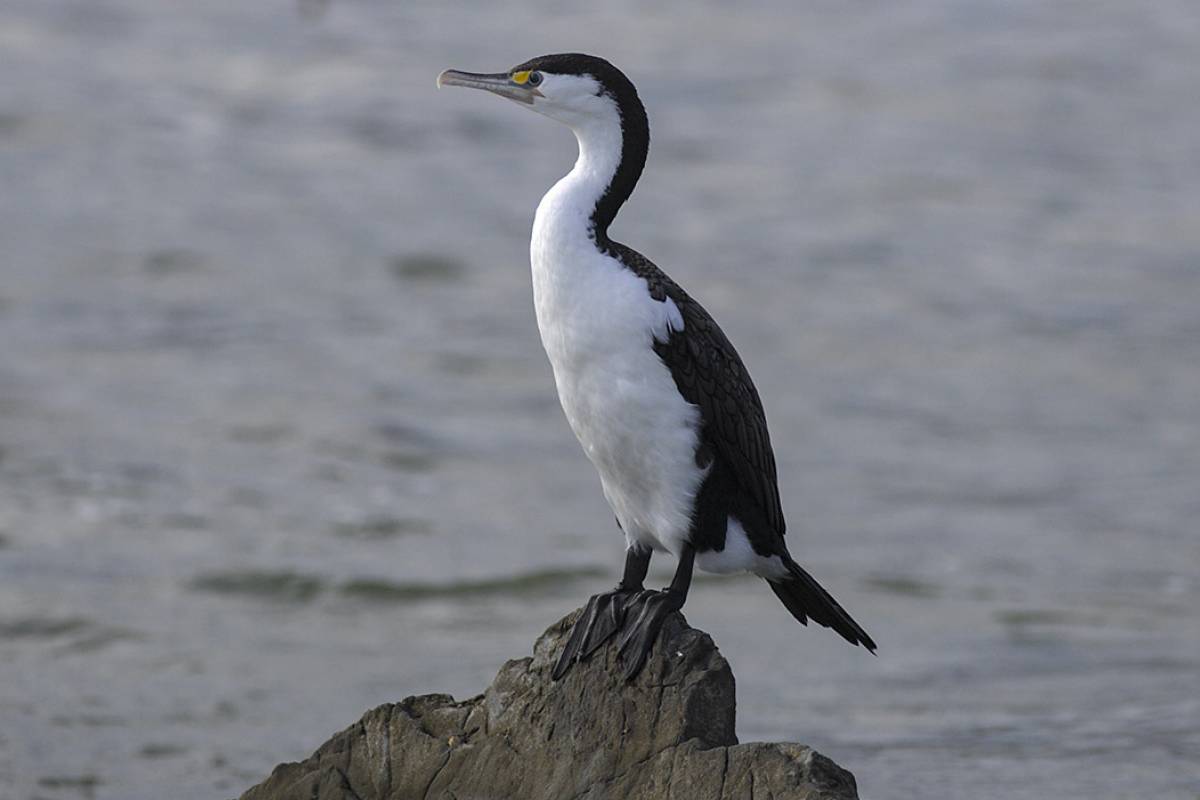
Pied Shag
Pied shags are a distinctive and commonly sighted bird along the Kaikōura Coast.
The pied shag (Phalacrocorax varius) is almost as large as the black shag. It's a distinctively-coloured large black and white seabird, with a large and distinctive hooked beak. Despite being almost an entirely coastal-feeding species, Kaikōura's pied shags nest inland at Lake Rotorua. They're a social species and groups of birds can be seen resting on beaches, although they are generally solitary when feeding. They feed on coastal fish such as mullet and flounder and also paddle crabs, and dive below the surface to feed to depths of 20 metres. They rarely venture more than a kilometre or so offshore. The pied shag breeds throughout New Zealand with colonies in macrocarpa and pohutakawa trees. Like the black shag, pied shags were persecuted by fishermen, and seen as competitors for fish.
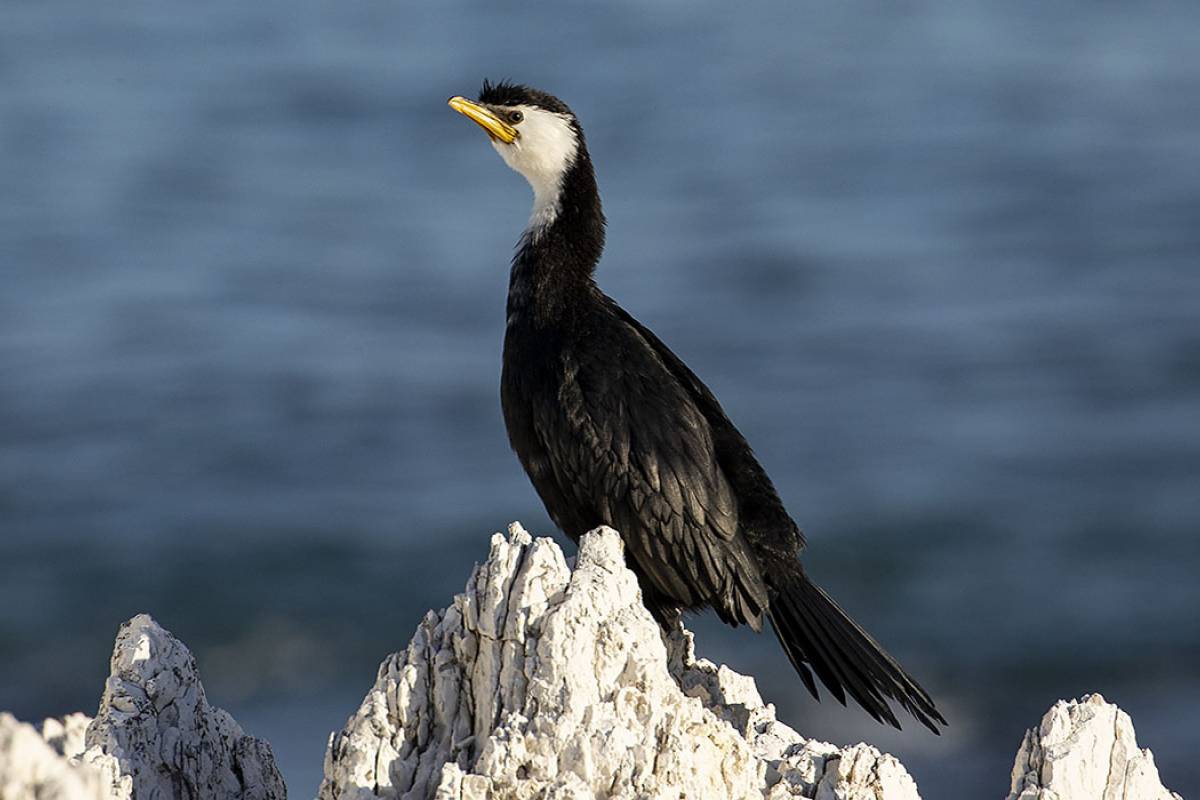
Little Shag
Often seen along the Kaikōura coastline throughout the year sitting on rocks or feeding in rocky shallows.
The little shag (Phalacrocorax melanoleucos) is only half the size of the pied shag and black shag. It's a polymorphic species, meaning there are multiple distinct forms within the one species: black, white-throated, and pied. Each looks like either a miniature pied or black shag, but the little shag is easily distinguished by its smaller size. Numbers of little shags have increased dramatically in recent years, and they're found throughout New Zealand, Australia and Indonesia. Most colonies are in discrete inland locations, with birds flying down to coastal areas to feed on small fish around rock pools. They're rarely seen offshore.
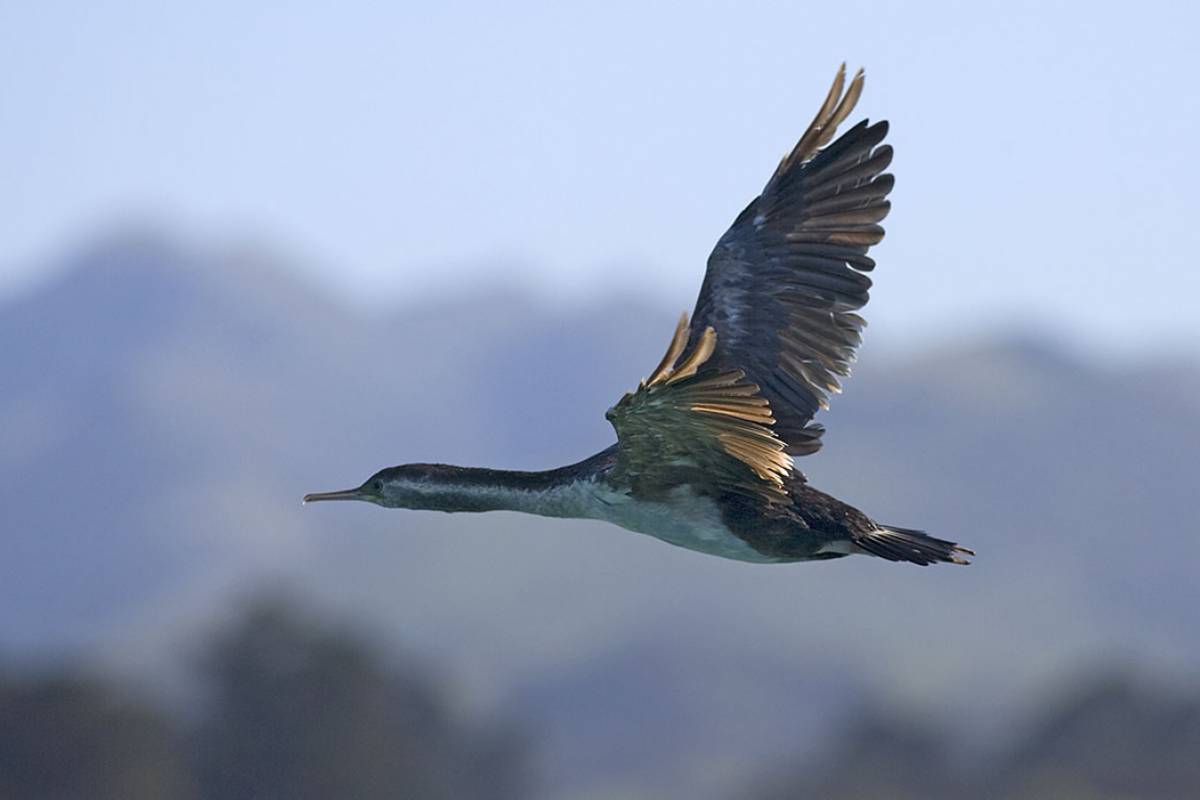
Spotted shag
Spotted shags are only found in New Zealand waters. Large colonies of thousands of birds breed on Banks Peninsula and smaller colonies are found in the Marlborough Sounds.
Generally only small flocks of spotted shags are seen along the Kaikōura Coast, however a colony of juvenile birds in their hundreds can be found on Barney's Rock in the autumn months. This is when hundreds of spotted shags are seen flying in impressive "V" formations along the Kaikōura coastline and off the Kaikōura Peninsula in transit. A smaller colony of spotted shags roost on rocks next to the New Wharf on the Kaikōura Peninsula. Unlike the black, pied, and little shags, the spotted shag is only a coastal species. Spotted shags nest on sheer rock faces and can often be seen feeding in large flocks. The adults develop elaborate crests when courtship is taking place.
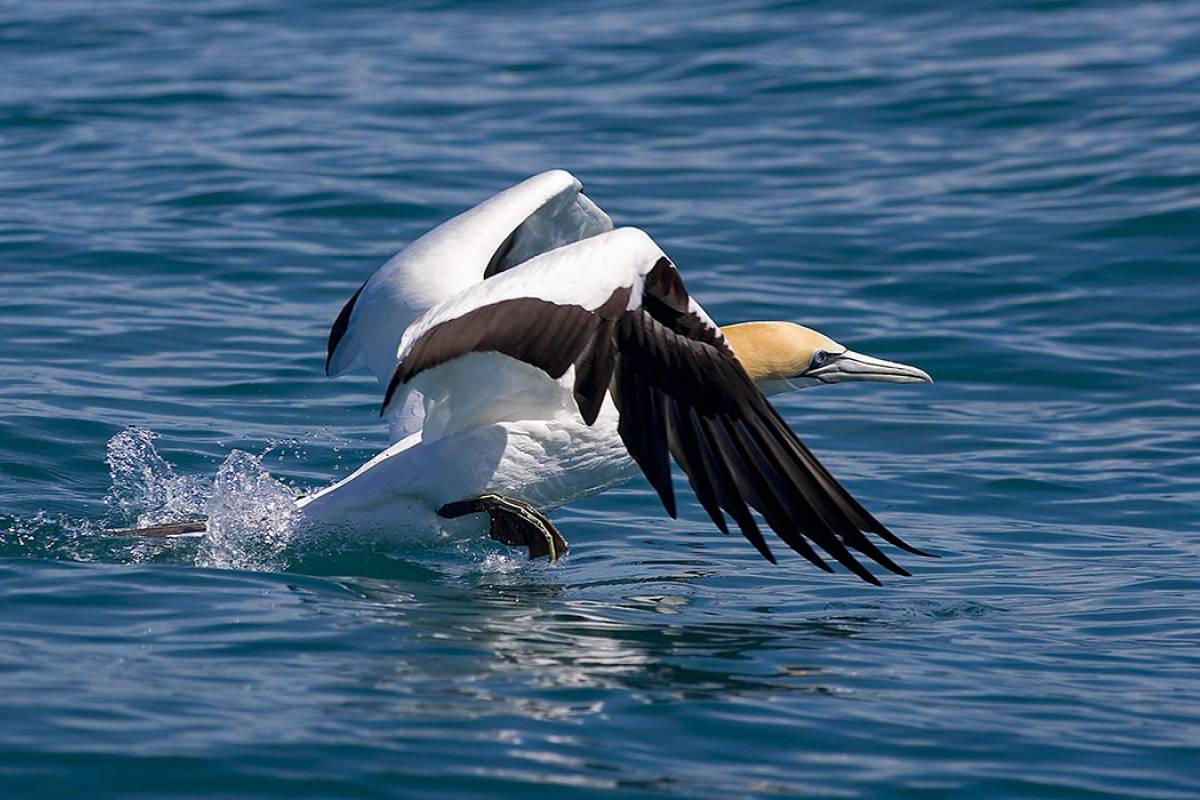
Australasian Gannet
Adult birds spend spring and summer at their breeding colonies before dispersing to coastal waters around New Zealand for winter.
Gannets are highly distinctive seabirds with a 2 meter wingspan, black tipped wings and a yellow head. Juvenile birds are speckled brown and may take up to 5 years to obtain adult plumage. The average lifespan of a gannet is between 25 to 40 years and they are believed to be one of the longest lived seabirds. The Australasian gannet (Morus serrator) is also known locally as “takapu”. They typically breed in large colonies around New Zealand and Australia with the largest colony at Cape Kidnappers, Napier. The closest breeding colony to Kaikōura is at Farewell Spit, where unusually the birds nest on shell banks at sea level. Gannets mate for life with a single egg laid between mid-September to mid-December. The egg is incubated by both parents and both adults are kept busy feeding the chick.
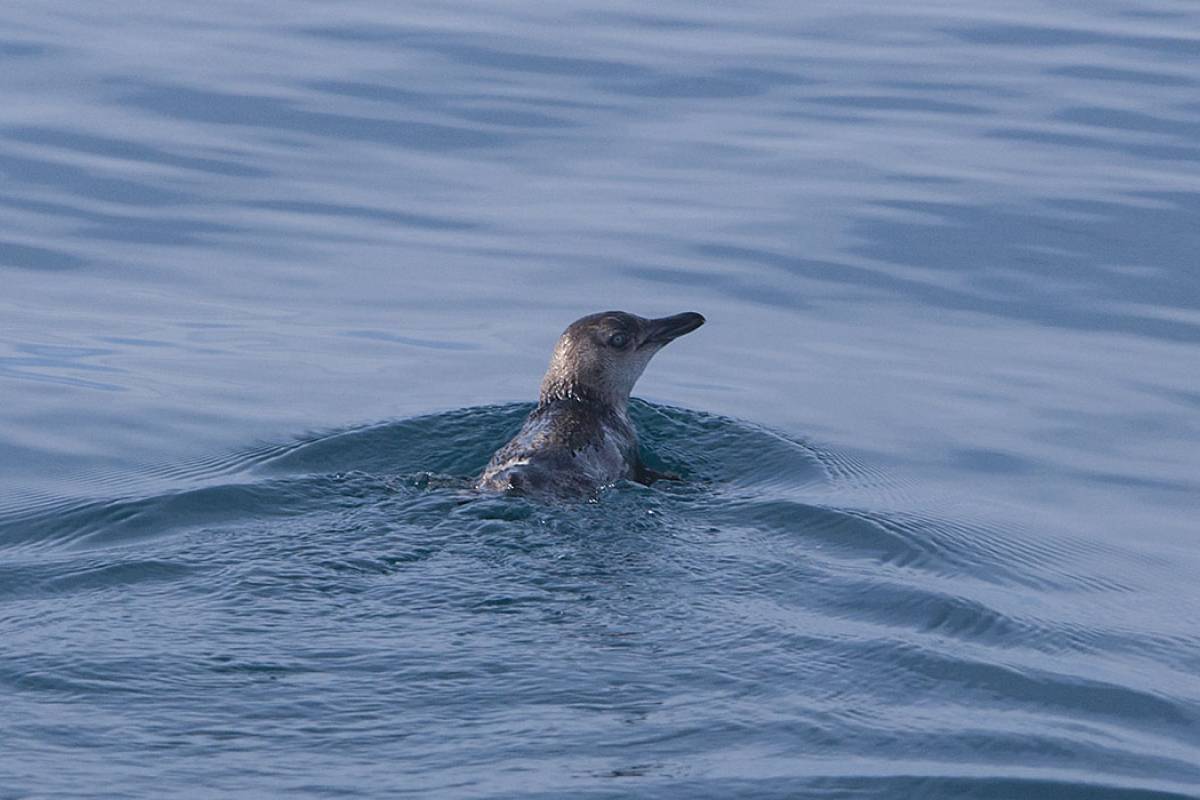
Blue penguin
Also known as the little penguin, they are the world’s smallest penguin measuring around 25cm - 30cm tall and only 1kg in weight.
Blue penguins (Eudyptula minor) spend the day out at sea hunting for small fish, crustaceans and squid, then return back to land under the cover of darkness. They can travel up to 70km from the colony, but no more than 25km offshore. They can reach speeds of up to 6km/hr, but usual speed ranges from 2-4km/hr. Blue penguins reach breeding age around 2-3 years old, and two eggs are laid from August to November in burrows. The adults will take it in turns to stay with the chick guarding it until it's 3 weeks old, then both adults will go out to sea to forage.
In Kaikōura the best chance to see these birds is out at sea. Larger populations can be found further south in Oamaru and Timaru.
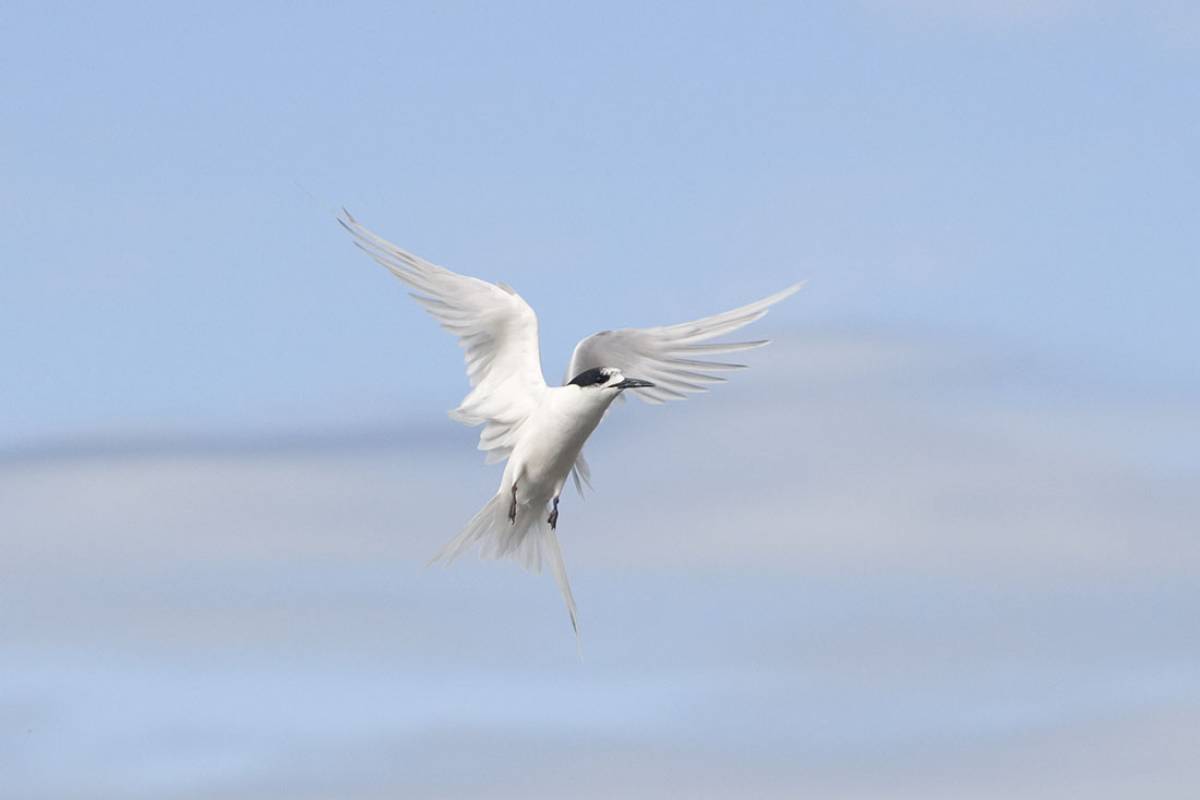
White-fronted Tern
The white-fronted tern is the most common tern in New Zealand.
Their name is derived from a white band between the black cap and bill. The birds are plunge diving birds, feeding almost exclusively on small fish such as pilchards and smelt that larger birds chase towards the surface. The white-fronted tern breeds around New Zealand and on islands in the Bass Strait between Australia and Tasmania. They nest from October to January in large colonies on sandy or rocky beaches, shingle beaches or rocky stacks. They lay one or two eggs, with the young fledging between 4-5 weeks old, and they can live up to 18 years. White-fronted terns can frequently be observed being targeted by skua, which chase them to drop their food or to regurgitate their last meal.
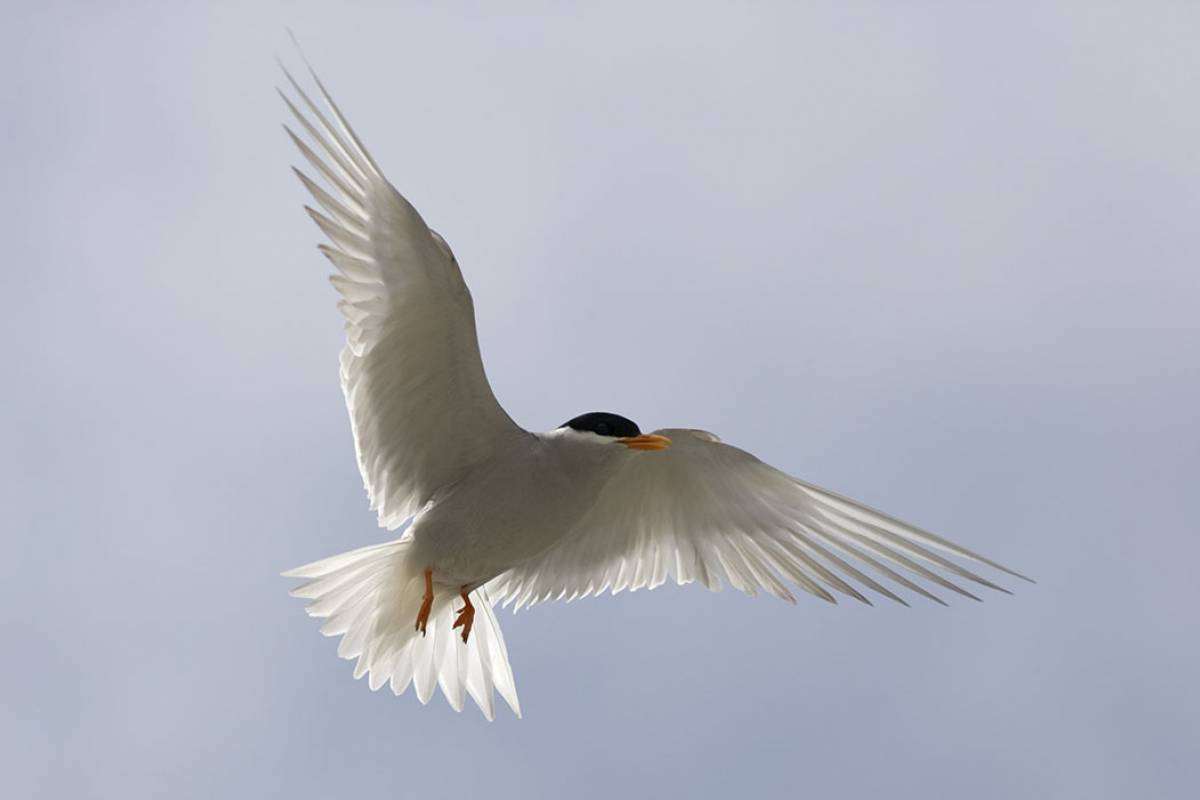
Black-fronted Tern
The black-fronted tern is a small grey tern commonly seen on braided rivers, estuaries and harbours of the eastern South Island.
They breed on the braided rivers of the eastern South Island, dispersing to coastal areas after breeding. The black-fronted tern is an attractive and highly distinctive bird in breeding plumage, with the slate grey plumage contrasting with the black cap and bright orange bill. Juveniles and immature birds may be confused with other vagrant tern species but all are easily separable. In addition to feeding on rivers, estuaries and offshore waters, black-fronted tern are often observed flying over pasture and arable fields with their distinctive buoyant flight, hawking insects and picking worms from the ground.
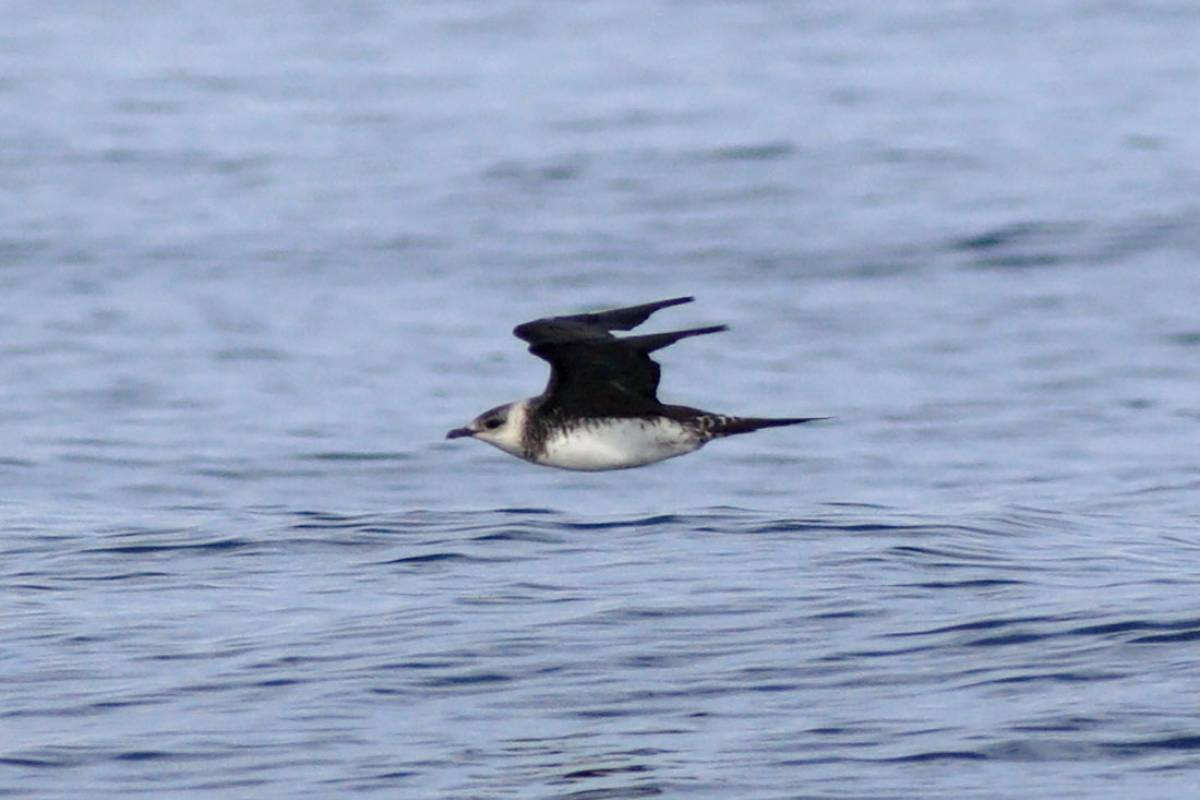
Arctic Skua
Arctic Skuas are often seen in New Zealand coastal waters, although it is unusual to see aggregations of more than 10 birds at once.
Skuas (also called jaegers) are strong-flying piratical seabirds closely related to gulls. The Arctic skua is the most common of the three northern hemisphere skua species that visit New Zealand during the southern hemisphere's summer, before migrating north to Arctic and subarctic breeding grounds. A few immature birds stay in their breeding are over winter instead of migrating. Arctic skuas are usually seen in coastal waters, harbours, sounds and estuaries. They are known to get much of their food by pursuing other seabirds, forcing them to drop fish they have caught.
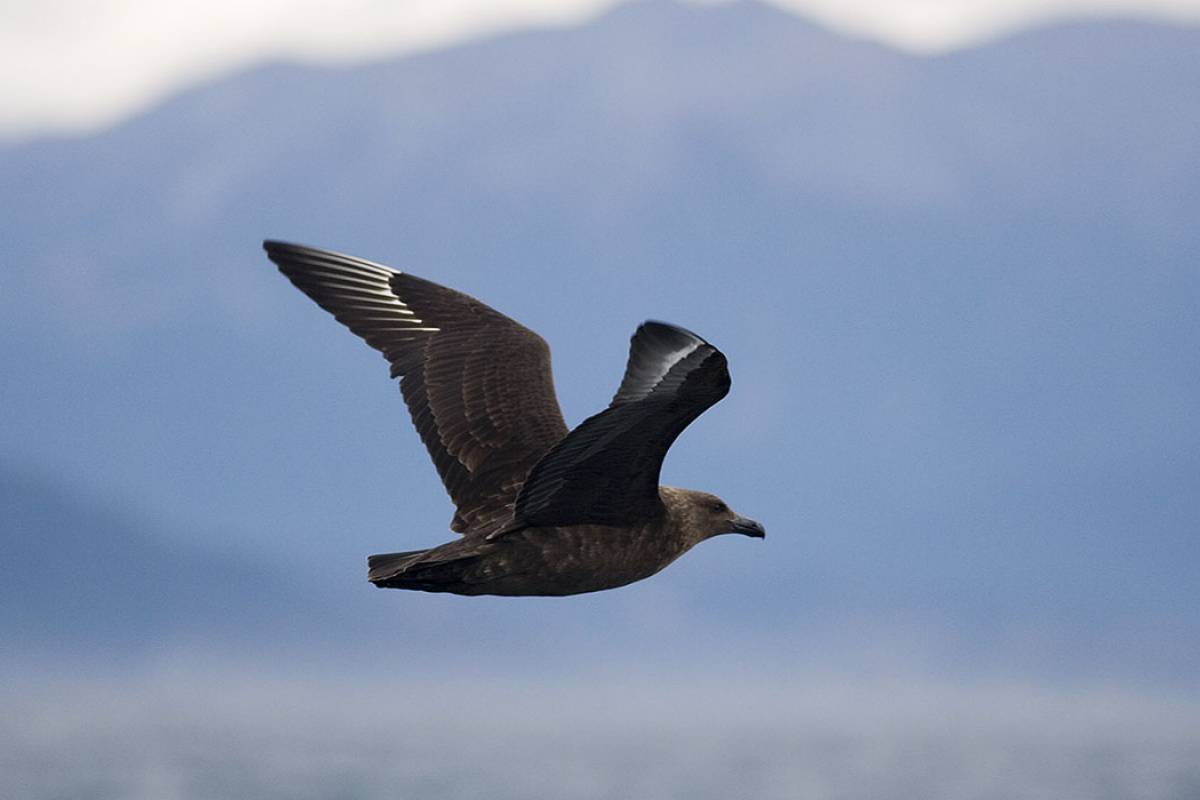
Brown Skua
The brown skua is a large seabird that breeds in the subantarctic and Antarctic zones and moves further north when not breeding.
The brown skua is a subantarctic breeder and is only occasionally sighted in Kaikōura. It’s the heaviest of the skua species and the females are larger than the males which is the complete opposite for gulls, albatrosses and petrels. It is 52-64cm in length, 126 - 160cm in wingspan and has a body mass of 1.2 - 2.2kg.
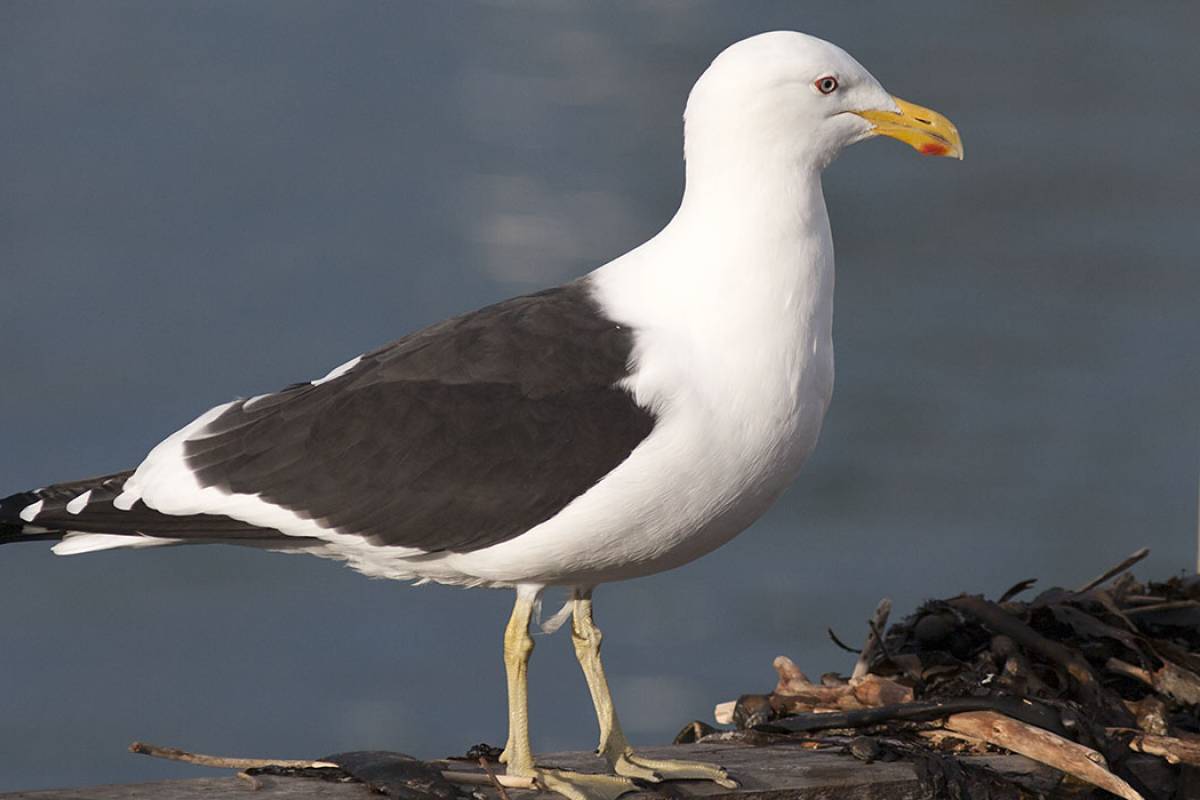
Black-backed Gull
These birds are highly adaptable, opportunistic scavengers and can live in cities, coastal areas, rivers and lakes.
The black-backed gull is the largest gull in New Zealand. Its black back and upper wings make it a highly distinctive sight. There are two subspecies of black-backed gulls. One subspecies breeds in South Africa, the other breeds around the sub-Antarctic and temperate southern hemisphere, including New Zealand. Their diet is huge, ranging from fish, shellfish, eggs, offal, refuse, carrion and frogs. They can commute up to 30km/day between roosting and feeding sites and will follow ships into pelagic waters. They prefer to nest in large colonies, with nest building beginning in late July. The nest is built mainly by the male, consisting of seaweed, twigs, grass, feathers and tidal debris.
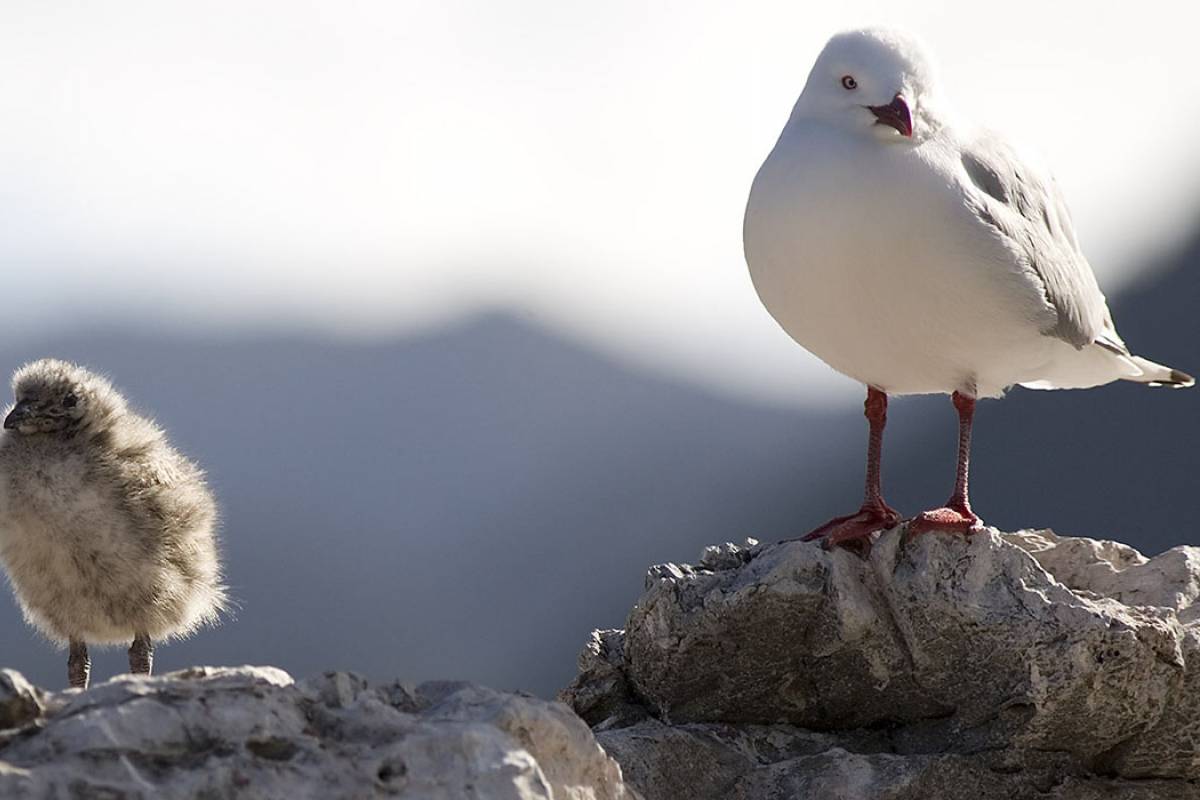
Red-billed Gull
Red-billed gulls are also known as silver gulls in Australia and are sighted on the bird tours on a daily basis.
Red-billed gulls breed on the Kaikōura Peninsula. Here, these birds have been extensively studied since the 1960s with research on their social organisation and particular habits. Birds with coloured bands on their legs are frequently seen both on land and at sea around Kaikōura. The gulls breed from early October to late December, laying one to five eggs. Both sexes incubate the eggs and provide food for the chicks. The young fledge around 37 days old, but remain dependent on their parents for a further three weeks. Birds vacate their breeding grounds in early autumn, although most birds remain within 400km of their breeding colony. Research on banded birds in Kaikōura has shown that some birds have been seen as far away as Auckland and Invercargill.
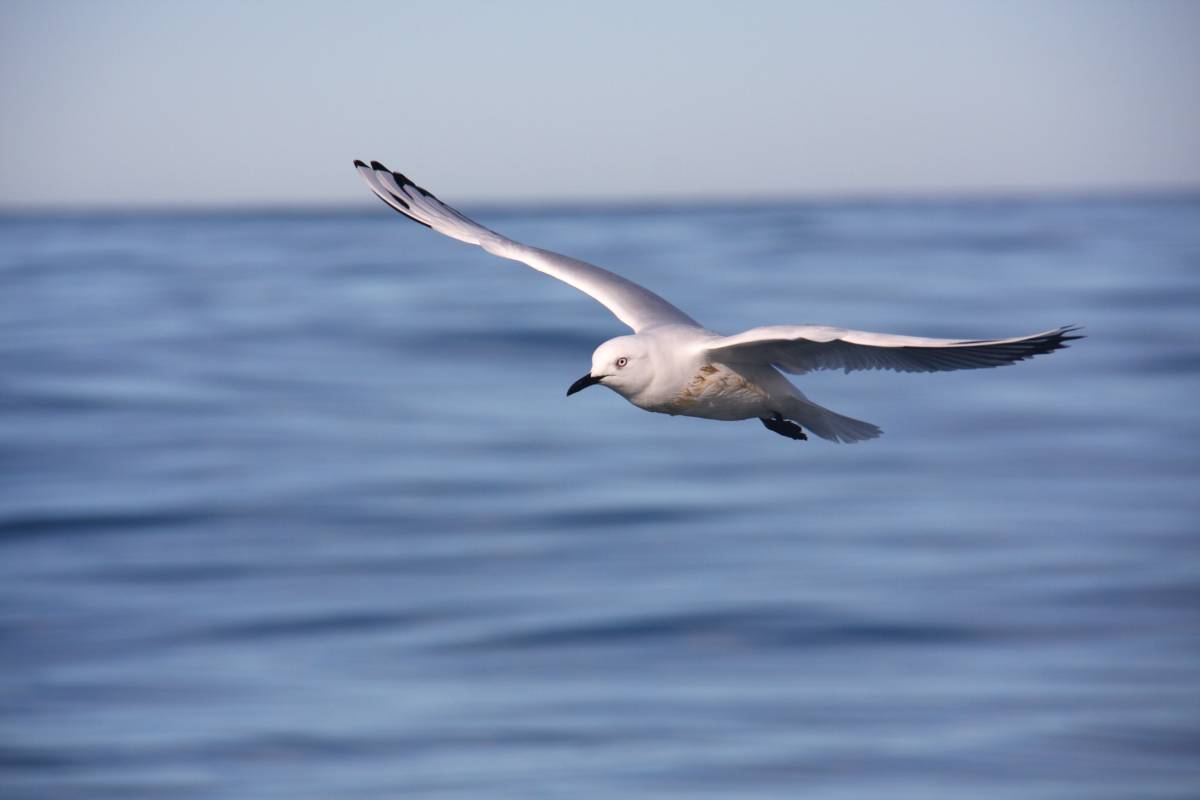
Black-billed gull
New Zealand’s only endemic gull, the black-billed gull is distinguishable from its red-billed cousin by its stouter black bill and slender size.
The black-billed gull breeds mainly on braided rivers on South Island, moving to more coastal areas during the winter months. Unlike many other gulls the black-billed gull is unlikely to be found in urban areas and is not often observed scavenging food. They nest in large noisy colonies along riverbeds and are rarely found nesting as an isolated pair. They have a varied diet consisting of fish, marine invertebrates as well as insects and freshwater invertebrates.
Recent Bird Sightings
With around 150 species of birds recorded here so far, Kaikōura is one of New Zealand's top birding destinations. The wonderful array of seabirds just offshore are the jewel in the crown with five varieties of great albatross, smaller lesser albatross, shearwaters, petrels and several other seabird species such as shags, penguins, gulls and terns.

